Română
As in every spring, before the beginning of grazing, The Carpathian Foundation, together with its associated partners (Transilvania University and ICAS), have reunited with the main stakeholders to settle the grazing areas and how this activity will be monitored in the following year, as not to affect the conservation objectives of the LIFE FOR MARSH project. The main guests were the animal breeders from Sanpetru, Prejmer and Harman, together with representatives of APIA Brasov, Directorate of Agriculture Brasov, Environment Directorate Brasov, Environment Protection Agency Brasov, Forestry Directorate Brasov, Prefecture of Brasov.
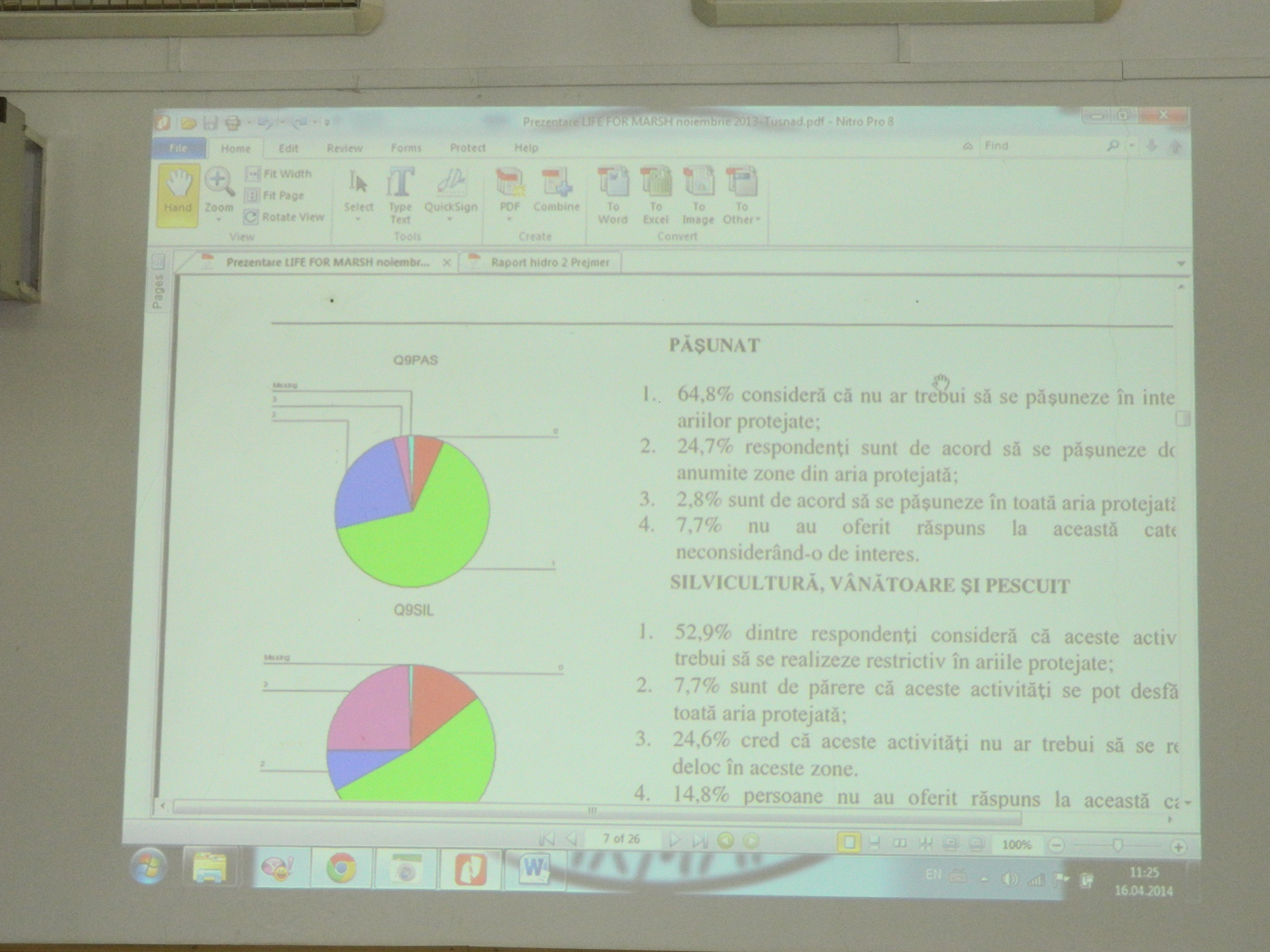
The meeting has started with the presentation of the new results of the studies generated inside the project, highlighted by the project manager Ionescu Georgeta. Thus, the results of the hidro-pedological studies were correlated with the effect of the extensive grazing on specific areas of the project. The hidro-pedological study is the true evidence of the negative impact of the extensive grazing. Meanwhile, the attitude of the stakeholders was emphasized with extracts of the study undertaken at the beginning of the project, which seems favorable for the ban of grazing.
The president of the foundation, Vasile Boronia continued to plead for the importance of grazing restrictions and the wear of yoke for the dogs.
In order to come with a solution for the animal breeders, the representative of APIA Brasov- Savu Stefan delivered a presentation about the available subsidies and how these can be accessed. The Podu Olt Association was the only beneficiary of this type of subsidies in the area.
The mayor of Sanpetru, Rusu Ion, has brought forward the problem of poor waste management, often brought illegally from Brasov, by night and the waste pits of Butuza and Brasov, which have a negative influence on the air quality and consequently on nature conservation.
The universitary professor Ionescu Ovidiu has concluded by a call to resolve the problem of the dogs from the site, which disturb the fauna and affect the conservation objectives.